

AE Operational Dispatch — May 16, 2026
Conflicting goals with one shared reality.

📌 NOTE TO NEW SUBSCRIBERS
American Escapee started as a place to say what others wouldn’t.
Now it’s a lens people use to make sense of what’s going on.
And proudly, as of today, we’re 8,789+ strong.
I’m especially proud that AE isn’t built with sponsor influence. Instead, it’s written with a mission to give readers a different read on the world.
And yet, less than 0.5% of readers support the work that makes this possible.
So if you rely on this voice, please support it for $0.19 a day to keep it independent and unfiltered.
Thank you in advance for your support.
In Case You Missed It..
Trump wants leverage, Wall Street wants access. Xi already has both.
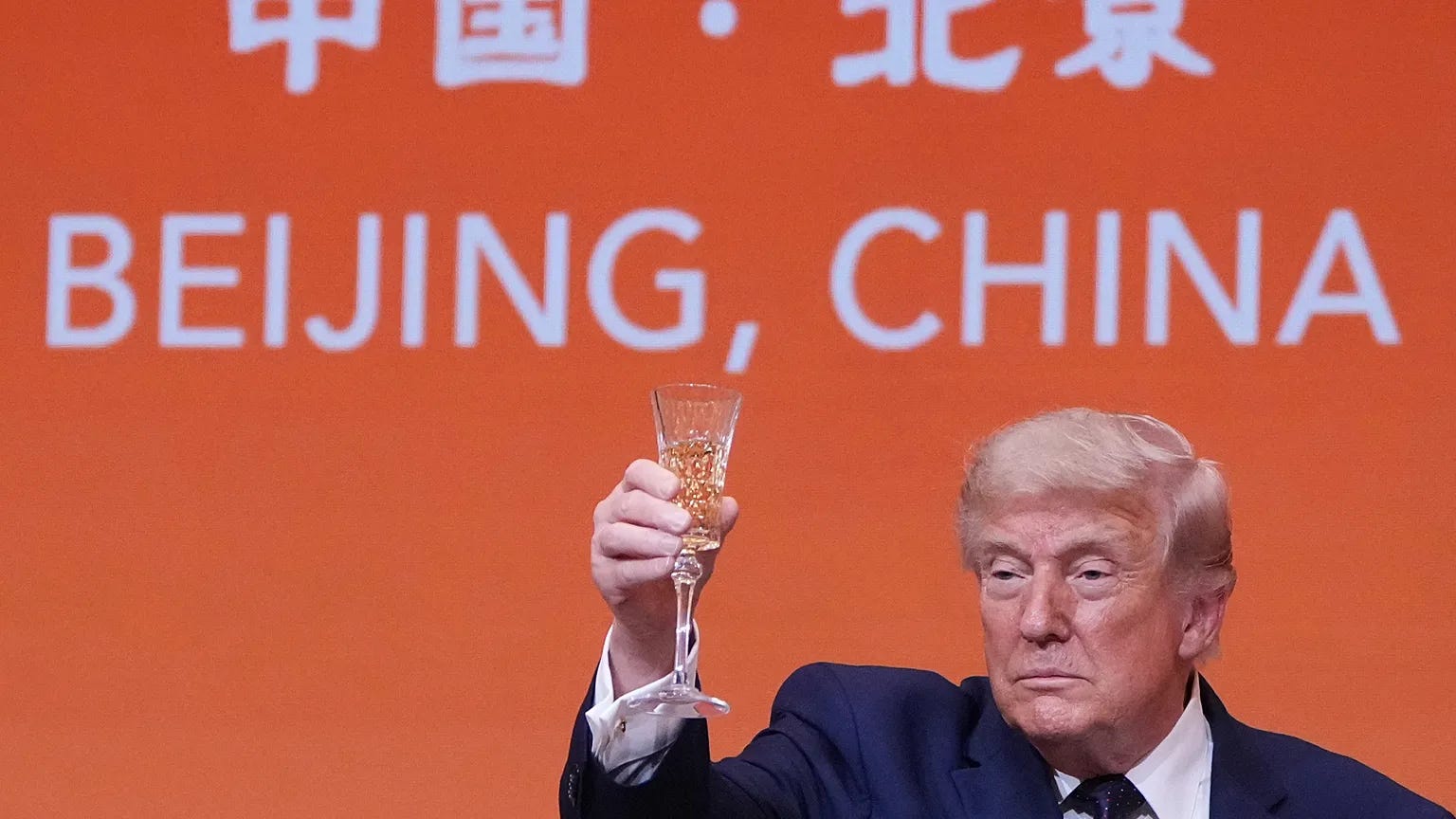
Trump arrived in China this week for the first visit by an American president in nine years, accompanied by senior officials and nearly twenty CEOs (representing over 12 trillion dollars in corporate power).
The trip comes after Trump’s last visit to Beijing, which was shortly followed by trade wars that Washington said would be “an easy win.” Since then, tariffs, sanctions, export controls, and economic restrictions have become the defining features of U.S.-China relations, right up until the moment Wall Street needed another meeting.
Despite years of portraying China as America’s greatest threat, many of the country’s largest corporations remain deeply dependent on Chinese manufacturing, consumers, and financial markets. Much of the delegation’s agenda reportedly centered on gaining greater access to Chinese markets while simultaneously competing against them.
During the visit, China reportedly refused any discussion of Taiwan, a condition Trump accepted without public objection. Reporters repeatedly asked him about the issue and were met with silence, a noticeable shift from the tariff-heavy bravado that defined much of his rhetoric last year.
Instead, Trump took a notably warmer tone toward Xi Jinping, praising the Chinese leader throughout the trip and even publicly toasting him despite famously not drinking alcohol. At one point, Trump attempted cultural diplomacy by explaining that Chinese citizens love basketball and jeans the same way Americans love Chinese restaurants, briefly reducing geopolitical strategy to a food court conversation.
Behind the ceremony, the visit carried larger implications tied to Iran and global trade. Washington is believed to be gauging how committed Beijing remains to Tehran as tensions escalate in the Middle East. China depends heavily on energy shipments passing through the Strait of Hormuz, meaning any future disruption by America could have major economic consequences.
At the same time, American corporations accompanying Trump are seeking deeper investment ties with China, an awkward reality for a country still publicly insisting economic decoupling is the future.
Beijing, meanwhile, appears largely unmoved by Washington’s pressure campaign. China’s 77% tariff on American beef remains in place, along with a 22% tariff on soybeans, leaving U.S. agricultural exporters stuck paying the price for a trade war politicians now barely mention.
Xi has also committed roughly one trillion dollars toward factories on American soil, especially for electric vehicles, hardly the image of “America First” but a deal Trump is busy making.
Adding to the drama, Russia is also scheduled to meet with Xi immediately after Trump leaves, another reminder that Beijing is now the table everyone wants to sit at.
Progressives have chosen a front-runner. But the party still gets a vote.
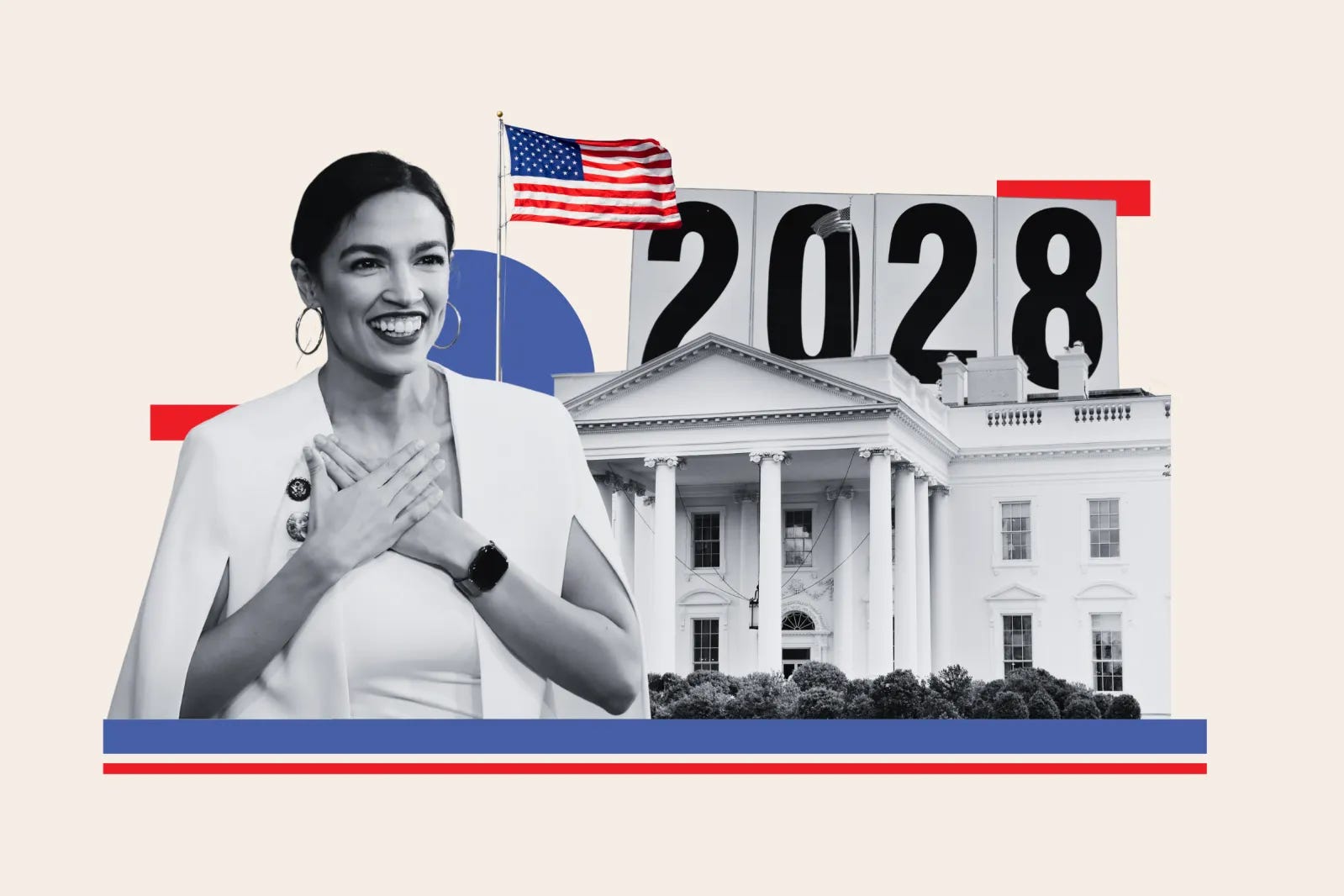
The new AtlasIntel poll has shaken up early 2028 speculation by placing Alexandria Ocasio-Cortez among the leading Democratic contenders. A result that is already making party insiders nervous and progressive voters cautiously optimistic.
AtlasIntel is viewed by many analysts as one of the most reliable polls, after correctly predicting several recent presidential elections. Which means these numbers are given more weight than the usual early election fantasy draft.
For many progressives, the poll reflects growing frustration with a Democratic establishment that keeps offering carefully focus-grouped centrism. The complete opposite for voters who want candidates willing to openly challenge corporate power, wealth inequality, and the ever demanding donor class.
But AOC’s rise is also reviving a familiar fear among progressives: the Bernie Sanders problem.
Many supporters are already questioning whether someone who seems aligned with economic populism can actually make it to the top of the Democratic ticket. That is without being blocked, sidelined, or gradually reshaped into someone more acceptable to party leadership and billionaire donors.
So the question isn’t whether AOC can build support. It’s whether the Democratic Party can tolerate a candidate who owes more to its voters than its donors.
Because as we’ve seen before, enthusiasm matters right up until donor calls start.
What do you think?
If you’re listening, please visit the website to complete our poll.
I think we’re going to need a plan…

Note of the Week
This was the most popular note from the AE feed:
For Those Who Want Out
Thanks for Being Here
Whether you’ve been here from the beginning or just clicked in today, thank you for spending a few minutes with American Escapee.
This publication runs on attention, trust, and word of mouth, so every read, share, and subscription makes it all worth it.
If something in the writing resonated, please let me know. The comments are always open, and hearing from you genuinely makes my day.
Love y’all.